


Cross-Cultural Relationships: Creating Your Own Family Culture

Honouring your roots while creating something new together.
Written by Talisa Haskins

Between Two Worlds: Building a Life When Your Cultures Come Together
When two people from different cultural backgrounds fall in love, they are not simply bringing two people together.
They are bringing together histories, traditions, family expectations, beliefs, values, languages, celebrations, ways of communicating, ideas about marriage, parenting, gender roles, religion, food, money, and what it means to be a family.
And sometimes, they are bringing together two very different ideas about what a “normal” family looks like.
Cultural differences can be beautiful. They can also be surprisingly difficult.
Because when two cultures come together, the question isn't simply, “How do we respect each other's differences?”
Sometimes the deeper question is: “What are we going to create together?”
There Is No Culture That Automatically Gets to Be the “Default”
One of the most important shifts for couples navigating cultural differences is letting go of the idea that one person's culture should automatically become the dominant one.
There doesn't have to be a winner.
Your traditions don't have to replace mine. Mine don't have to replace yours.
Instead, couples have an opportunity to intentionally create something new: a family culture that reflects both of you.
Maybe you celebrate holidays from both backgrounds. Maybe you create new traditions that belong only to your immediate family. Maybe certain foods, languages, rituals, or values from each culture become part of your everyday life.
And sometimes, you may decide that neither of you wants to carry certain traditions forward.
That is part of creating a family culture, too.
Blending cultures doesn't mean taking 50% from one family and 50% from the other. It means asking:
What matters to us?
What do we want to carry forward?
What do we want to leave behind?
What do we want to create for ourselves?
When Family Has an Opinion
Of course, creating something new doesn't happen in a vacuum.
Families often have strong feelings about culture, tradition, marriage, religion, holidays, parenting, and what a family should look like.
And those opinions can become particularly complicated when your relationship crosses cultural lines.
You may hear:
“That's not how we do things.”
“In our family…”
“Your children should…”
“You're giving up your culture.”
“Why don't you celebrate this anymore?”
Sometimes these comments are rooted in love and a genuine desire to preserve family traditions.
Sometimes they are rooted in fear.
And sometimes, they can create a painful sense that choosing your partner means disappointing your family.
This can put couples in an incredibly difficult position: How do I honour where I come from without allowing my family of origin to dictate the family I am building now?
That boundary can be especially difficult when cultural identity is deeply connected to family belonging.
The Questions We Sometimes Have to Ask Ourselves
Cultural blending doesn't just require us to understand our partner.
It can require us to understand ourselves.
What parts of my culture do I genuinely value?
What have I always assumed was “normal” simply because it was familiar?
What traditions do I want to continue?
Which ones no longer fit the life I'm building?
What did I learn about marriage, family, gender, parenting, conflict, or communication growing up?
And perhaps most importantly: Which of these beliefs are actually mine?
Sometimes being in a cross-cultural relationship brings questions to the surface that we had never thought to ask.
You may find yourself reconsidering parts of your identity. You may discover that you feel more connected to certain aspects of your culture than you realized. You may also discover that some traditions no longer feel aligned with who you are.
That process can be liberating.
It can also be uncomfortable.
Sometimes Blending Cultures Involves Grief
We don't always talk about the grief that can come with building a life that looks different from the one our families imagined for us.
Choosing a partner from another cultural background can sometimes mean letting go of expectations.
Maybe your family imagined a particular kind of wedding.
Maybe they expected you to live nearby.
Maybe they assumed your children would be raised with certain traditions.
Maybe there were expectations about religion, language, food, holidays, or who would be part of your family.
And when your life takes a different path, there can be grief on all sides.
You can love your family deeply and still choose something different from what they wanted for you.
You can feel proud of your culture and still decide that some traditions won't continue in your own home.
You can feel grief about what you are leaving behind while also feeling excited about what you're creating.
These things can coexist.
And Sometimes the Conflict Is Painful
Cultural differences aren't always about food, holidays, or which traditions you celebrate.
Sometimes they touch deeply held values.
One partner may experience something as respectful while the other experiences it as dismissive.
One may see family involvement as supportive; the other may experience it as intrusive.
One may expect parents to have a significant role in their adult children's lives; the other may value greater independence.
Neither person is necessarily wrong.
But without honest conversations, these differences can quickly become personal.
You don't respect my family.
You don't understand where I come from.
You always choose your family over me.
You're asking me to give up who I am.
Underneath the conflict, there may be something much more vulnerable:
“Will there still be room for me here?”
The Beauty of Creating Something New
And yet, this is also where the beauty of blending cultures can emerge.
Your family doesn't have to look exactly like either family you came from.
It can become its own thing.
Maybe your children grow up knowing traditions from both sides of their family.
Maybe they hear different languages around the dinner table.
Maybe they eat foods their grandparents never imagined would be served together.
Maybe holidays become a combination of old traditions and entirely new ones.
Maybe your family develops rituals that belong to no one else.
There can be something incredibly meaningful about watching two histories become part of one shared future.
Not perfectly.
Not without conflict.
But intentionally.
You Are Allowed to Build Your Own Family Culture
When two cultures come together, the goal isn't necessarily to find the perfect compromise.
Sometimes it is to create a shared vision.
To sit down and ask:
What kind of family do we want to be?
What do we want our home to feel like?
What values do we want our children to grow up with?
What traditions do we want to preserve?
What are we willing to change?
What do we want to leave behind?
And what do we want to create that didn't exist in either of our families before?
Because ultimately, blending cultures isn't about choosing one culture over another.
I
t's about making room for both—and recognizing that your relationship gives you the opportunity to create something that belongs to both of you.
And maybe that's one of the most beautiful parts of building a life together:
You don't have to recreate either family you came from.
You get to decide what comes next.
When You Need Help Finding Your Way Together
Creating a shared family culture doesn't always happen easily.
Sometimes the differences between you and your partner bring up deeper questions about identity, family loyalty, belonging, values, and what each of you expected your life to look like. Conversations that seem to be about holidays, parenting, family involvement, or traditions can sometimes carry much bigger emotions underneath.
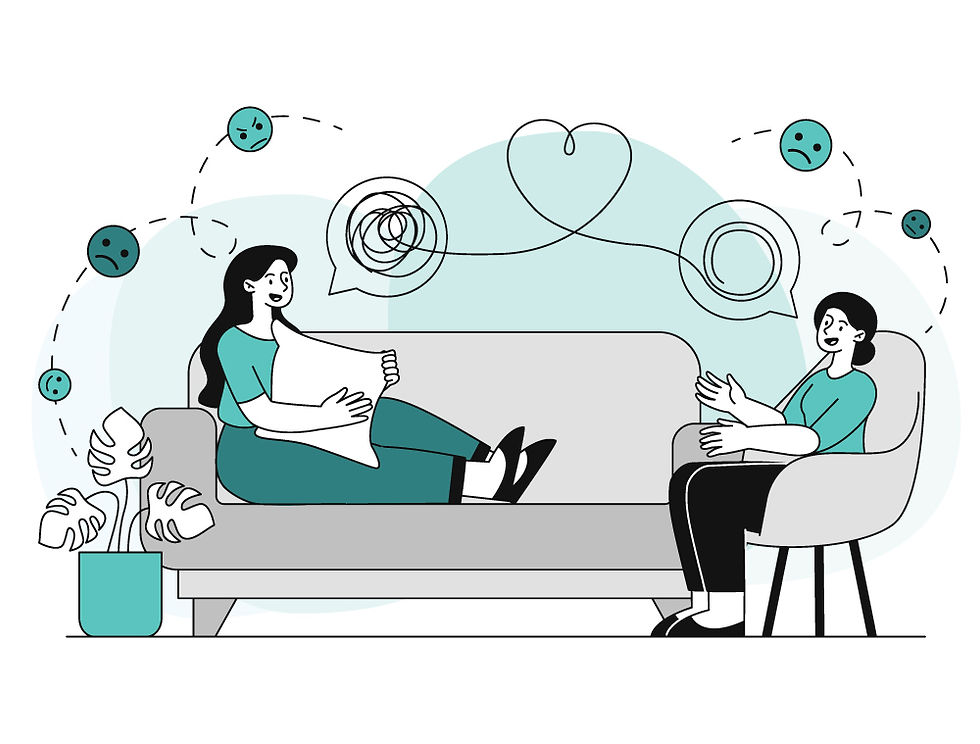
This is where couples therapy can help.
Therapy can give you a space to slow down the conflict, understand what each of you is bringing into the relationship, and talk about the things that can be difficult to navigate on your own. Rather than deciding whose culture, traditions, or expectations should take priority, you can work together to understand what matters to each of you and decide what you want your family to look like moving forward.
Because building a life together doesn't mean leaving your identities at the door.
It means finding a way for both of you to belong.
And sometimes, it means having the support to figure out what you want to carry forward, what you want to let go of, and what you want to create together.
If you're navigating cultural differences, family expectations, or conflict around identity and values, couples therapy can help you have those conversations with more understanding, intention, and connection.
Ready to start your journey? Explore our therapists and find your perfect match today!


Comments